
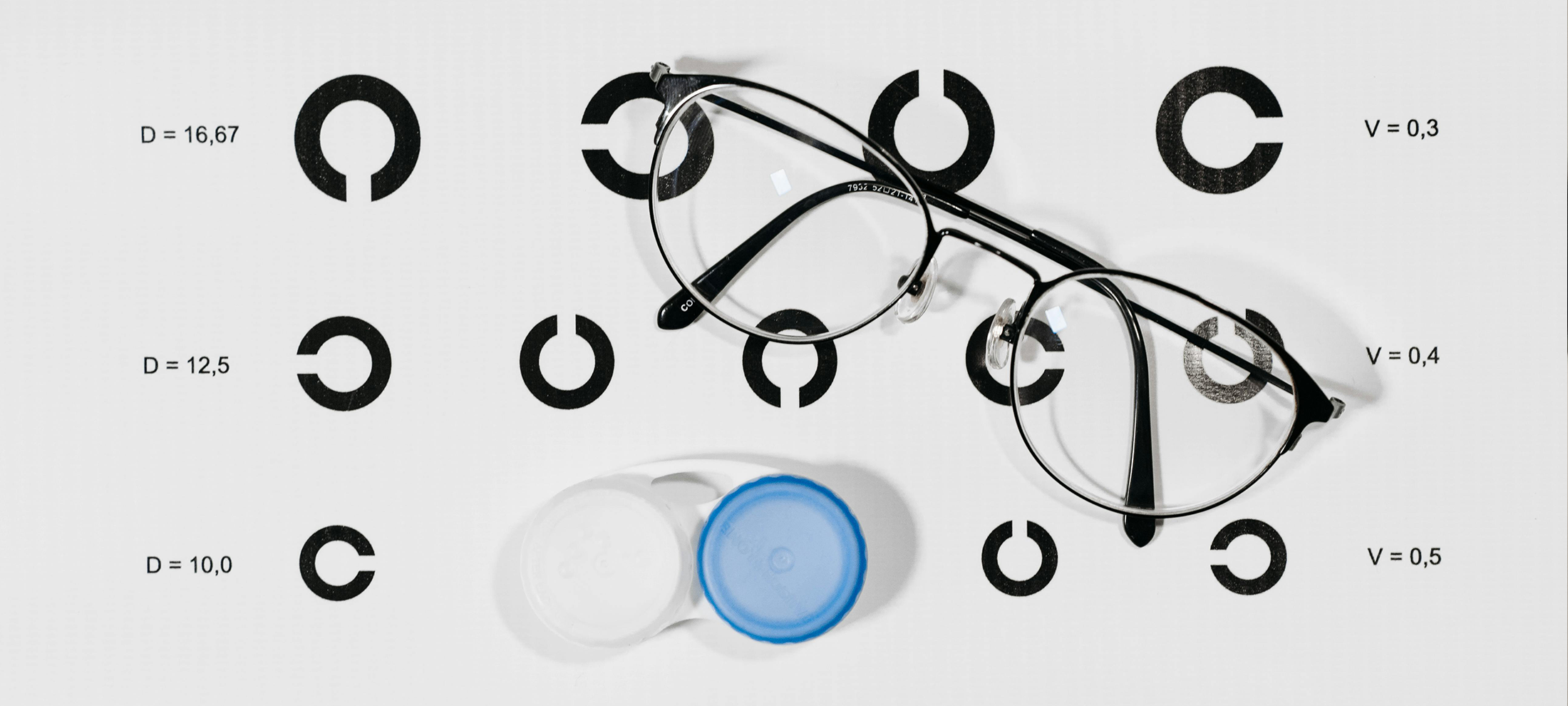
In addition to assessing the visual acuity, the eye care provider will test for common eye diseases, and assess how the eyes are functioning together. Did you know? Serious health issues like diabetes and high blood pressure are often first detected during an eye exam.
What is included in a comprehensive eye exam?
The optometrist will determine what tests are needed based on the medical history. However, the majority comprehensive eye exams include the following:
- Visual acuity to test the sharpness of the vision, usually with an eye chart
- Visual fields test to check for blind spots in the vision
- Retinoscopy to estimate the eyeglass prescription
- Refraction to determine the exact eyeglass prescription
- Slit lamp to check for common eye diseases and conditions
- Retinal photo screenings to test for diabetic retinopathy
- Tonometry to test for glaucoma
- Ophthalmoscopy to examine the optic nerve, retina, and blood vessels
Most eye care professionals recommend yearly eye exams, depending on the age, risk factors, and whether or not you wear corrective lenses. The American Optometric Association (AOA) recommends children have their eyes examined at 6 months old, three years old, at the start of school, and every two years until age 18. For adults, the AOA recommends a comprehensive eye exam every two years for ages 18 to 60 at minimum and annual exams for seniors age 61 and older.
What About Contact Lens Exams?
A comprehensive eye exam typically does not include a contact lens fitting. So you may need to schedule a separate contact lens exam.
What are my options?
There are many contact lens options available. the eye care provider will take the lifestyle and vision correction needs into consideration when helping you select the right lenses for the eyes.
Here are some of the most common contact lens types:

- Hard contact lenses – Hard contact lenses are rigid gas permeable. This means that they are porous enough to allow oxygen to enter through to the cornea. Hard contact lenses keep their shape on the eye.
- Soft contact lenses – Soft contact lenses are popular because they are very comfortable for the wearer. Soft lenses are appropriate to correct near and farsightedness and astigmatism.
- Disposable soft contact lenses – Intended to be worn for a short time, to help prevent allergic reactions or bacterial infections in sensitive wearers. Disposable lenses are also appropriate for children who might not take excellent care when cleaning their lenses.
- Extended wear contact lenses – Extended wear contact lenses are designed to be worn constantly for long periods of time – up to a week. They do, however, need to be deep cleaned weekly. Unlike all other lenses, extended wear contacts can be worn while sleeping. The lens type allows sufficient oxygen to reach the eye for health.
- Daily wear contact lenses – Most contact lenses are daily wear; meaning that they are worn all day and then removed at night for cleaning. These lenses generally last until their given expiration date, at which point they must be discarded and replaced due to the lens material breaking down.
- Colored contact lenses – These are worn to enhance or completely change the visual color of the iris. They are still prescription contact lenses and need to be treated with the same care you would give to regular lenses.
Accepted Insurances
- ADN Administrators
- Aetna Medicare
- Aetna US Healthcare
- Allstate Health Solutions
- Always Care Unum
- ASR
- ASR-HMO
- Bankers Fidelity
- Bankers Life and Casualty
- BCI Administrators
- BCN Advantage
- Blue Care Network
- Blue Cross & Blue Shield of Michigan
- Blue Cross Blue Shield of California
- Blue Cross Blue Shield of Illinois
- Blue Cross Complete
- Blue Cross Local
- Blue Cross of Minnesota
- Blue Cross- Special Group
- Blue Cross State
- CHAMPVA
- Cherokee Insurance Co.
- Cigna Healthcare
- Cofinity
- Concordia Health Plan
- Continental Life Ins. Co.
- Coresource
- Covenant Advantage PHP Medicare
- Covenant Select
- DMEPOS
- Eye Med Ret. Teachers
- Eye Med State of Michigan
- Eye Med Vision Care
- Eye Med-Aetna
- Federal Life Insurance Company
- Flint Area Sheet Metal H&W Fund
- H.A.P.
- Heritage Vision Claims Processing
- Humana Choice PPO
- Humana Medicare
- I.B.E.W Local No 17 Heath and Welfare Fund
- Local Sheet Workers Local 7
- Medicaid
- Medicare Advantage
- Medicare Advantage PPO
- Medicare HCSC
- Medicare Plus Blue
- Medico Insurance Co
- Medico Life Insurance
- Meridian Health Plan
- Messa 2
- Molina Medicare Options Plus HMO SNP
- Mutual of Omaha
- MVP Select Care Inc
- Nassau
- NGS
- NVA
- NVA/Heritage Vision
- Operating Engineer Local 324 Health Care Plan
- Physicians Health Plan
- Principle Financial Group
- Priority Medicare
- Priority Health
- Priority HMO
- Roofers Local 149JMS Administrators, Inc.
- RRB Medicare Claim Office
- State Farm Insurance
- Thrivent Financial for Lutherans
- Tricare North Region Claims
- United Healthcare
- United Healthcare
- UNUM Always Care
- Vision Care Plan
- VSP
- VSP Messa
- VSP Molina Medicaid
- VSP Molina Medicare
- VSP State
- Wausau Insurance Companies
- WPS Tricare
